Research blog
Peptide Research Blog
Plain-language explainers on 22 research peptides and blends: what each one is, how it is studied, and how strong the evidence is.
For Research Use Only – Not for Human Consumption. For Research Use Only. Not for Human Consumption. Not for diagnostic, therapeutic or medical use. Statements have not been evaluated by the FDA.
Want the visual version? See the Peptide Education Cards.
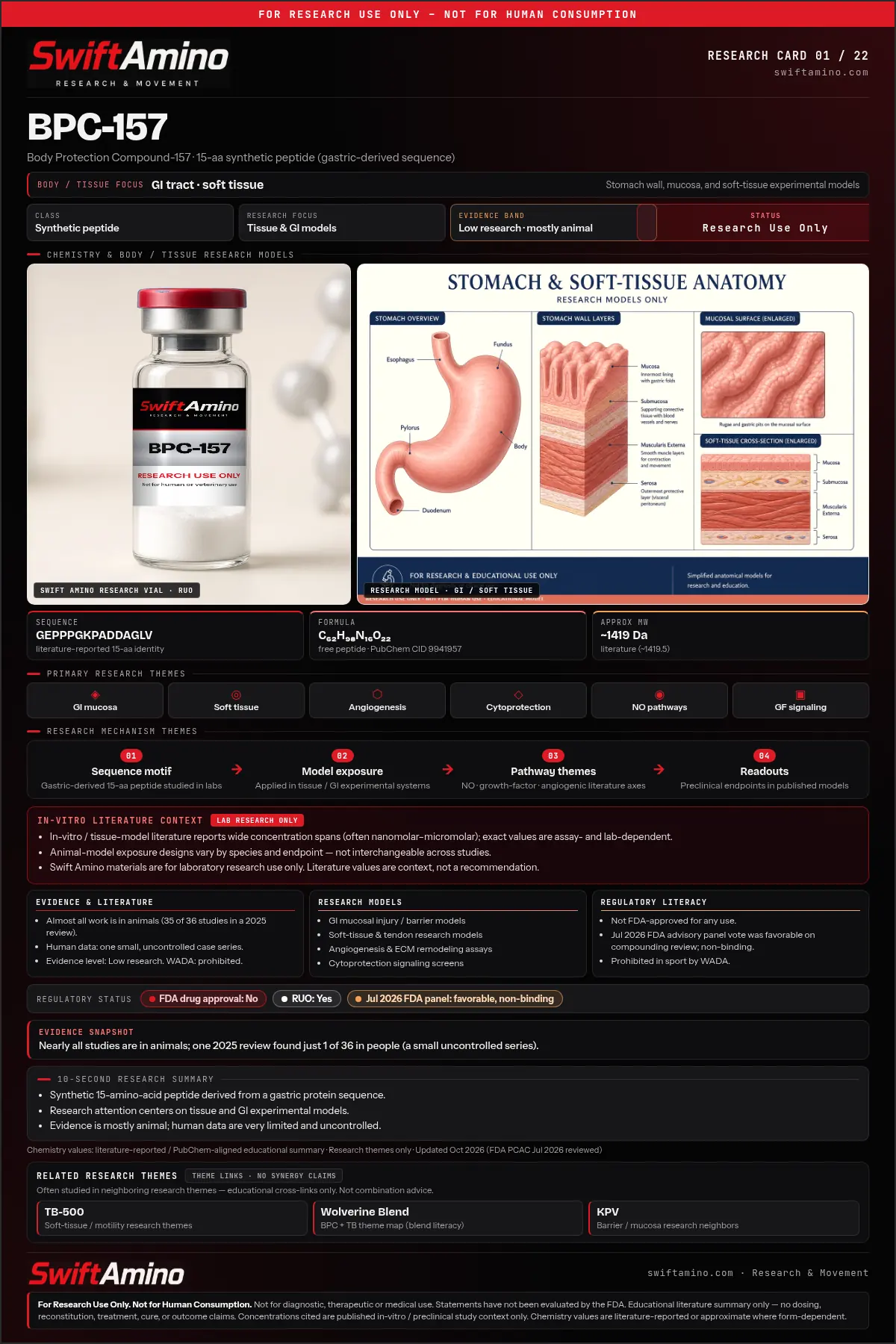
Synthetic peptide
BPC-157 Explained: What the Research Actually Shows
A short synthetic chain of 15 amino acids that shows up constantly in tissue and gut research, almost entirely in animals.
Low research · mostly animal
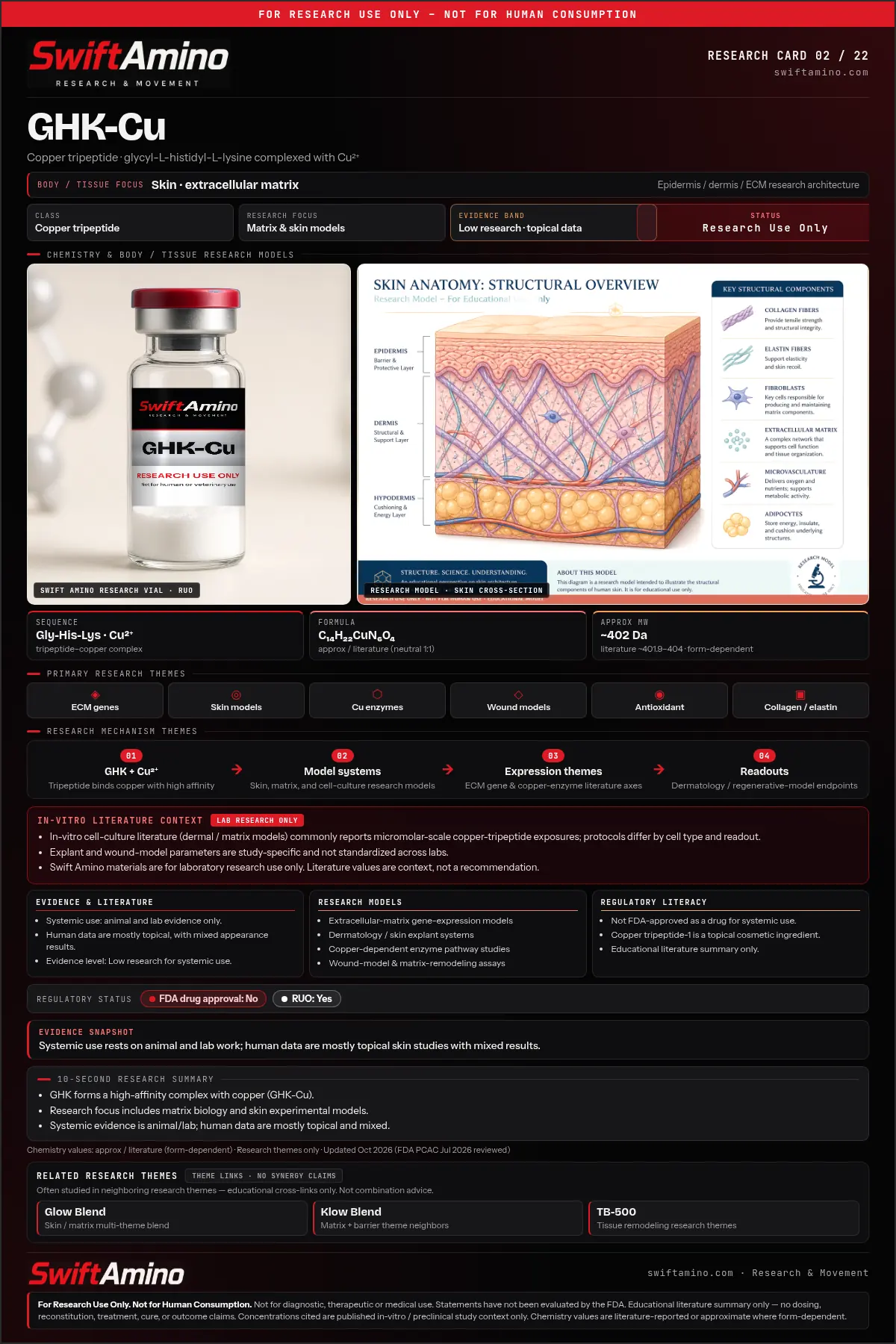
Copper tripeptide
GHK-Cu, the Copper Peptide: A Plain-Language Research Guide
Three amino acids clipped to a copper ion, widely studied in skin and tissue-matrix models.
Low research · topical data
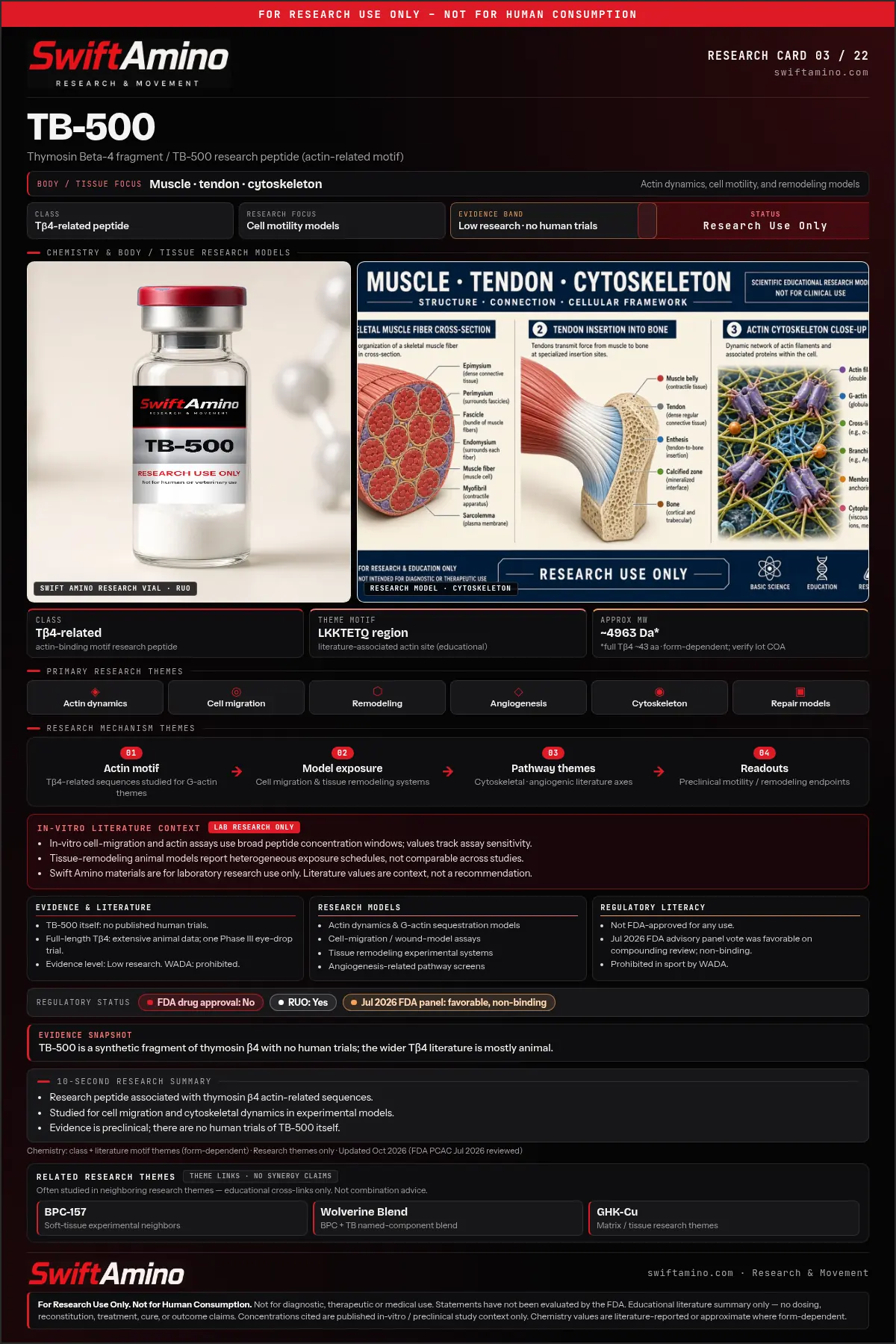
Thymosin beta-4-related peptide
TB-500 and Thymosin Beta-4: What Is Known and What Is Not
A synthetic relative of thymosin beta-4, studied for how cells move and rebuild, with no human trials of its own.
Low research · no human trials
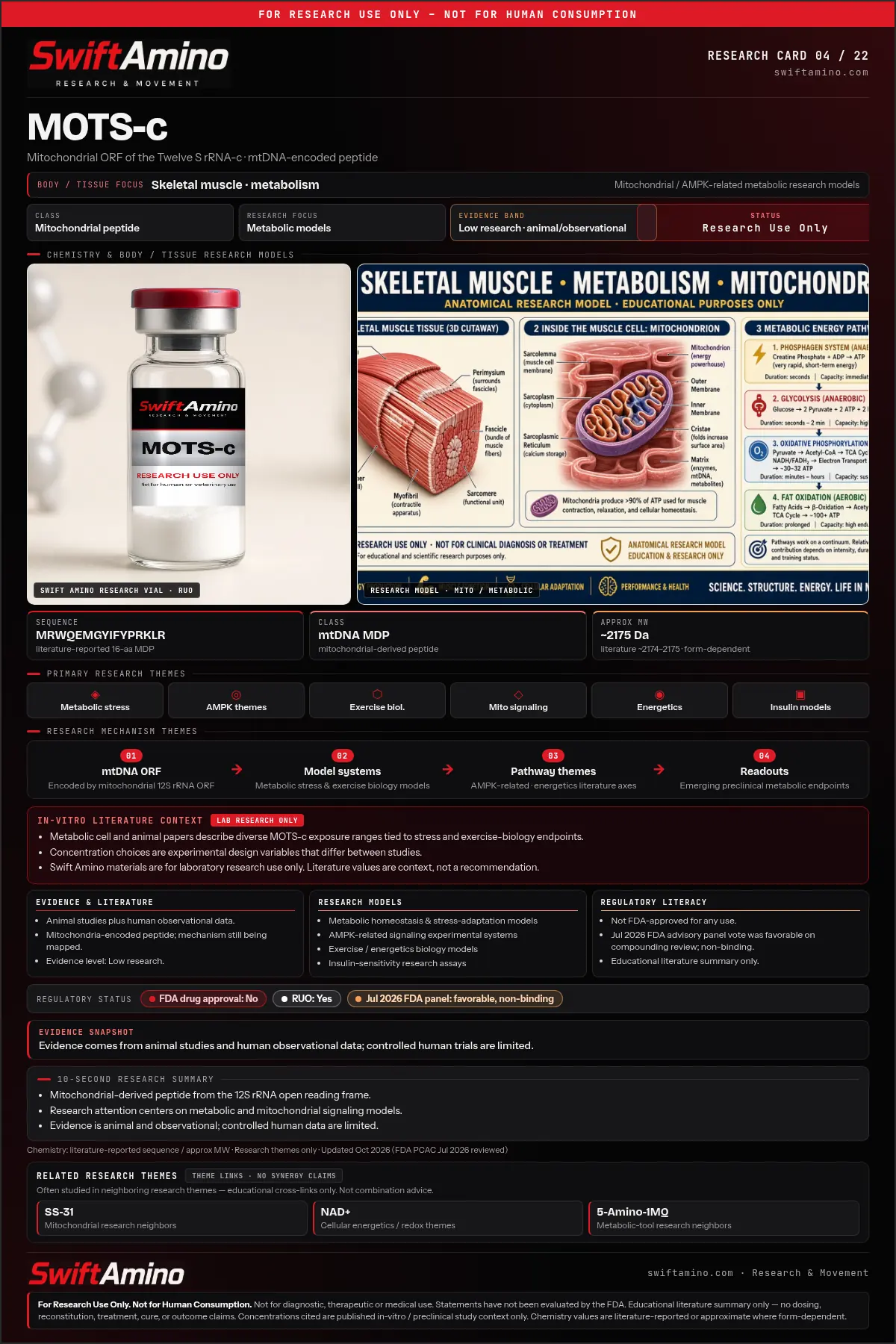
Mitochondrial peptide
MOTS-c: The Mitochondrial Peptide Researchers Are Watching
A small peptide that is encoded in mitochondrial DNA rather than in the nucleus, and a hot topic in metabolism research.
Low research · animal/observational
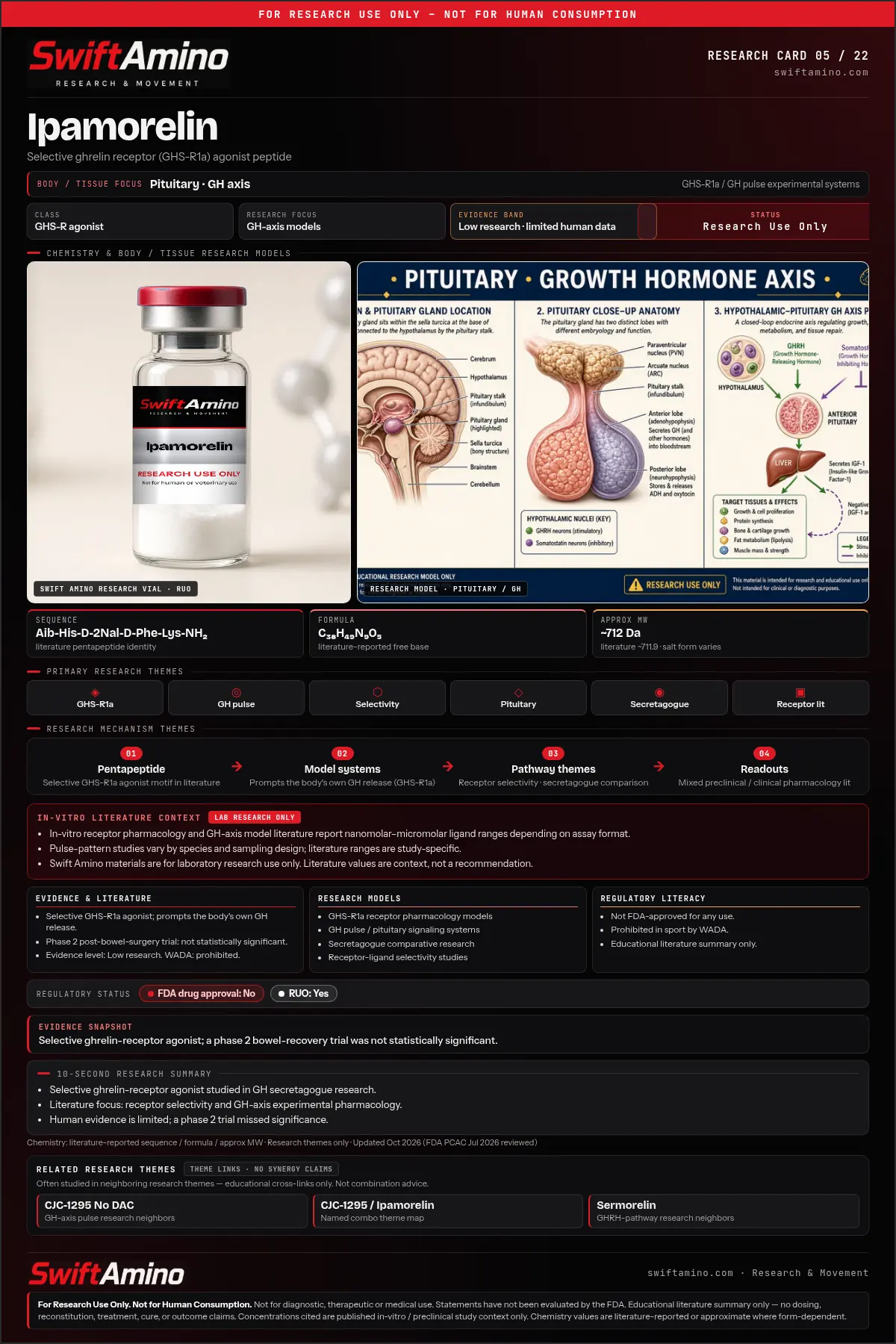
GHS-R agonist
Ipamorelin Explained: A Selective Ghrelin-Receptor Peptide
A five-amino-acid peptide used to study how the pituitary releases growth hormone.
Low research · limited human data
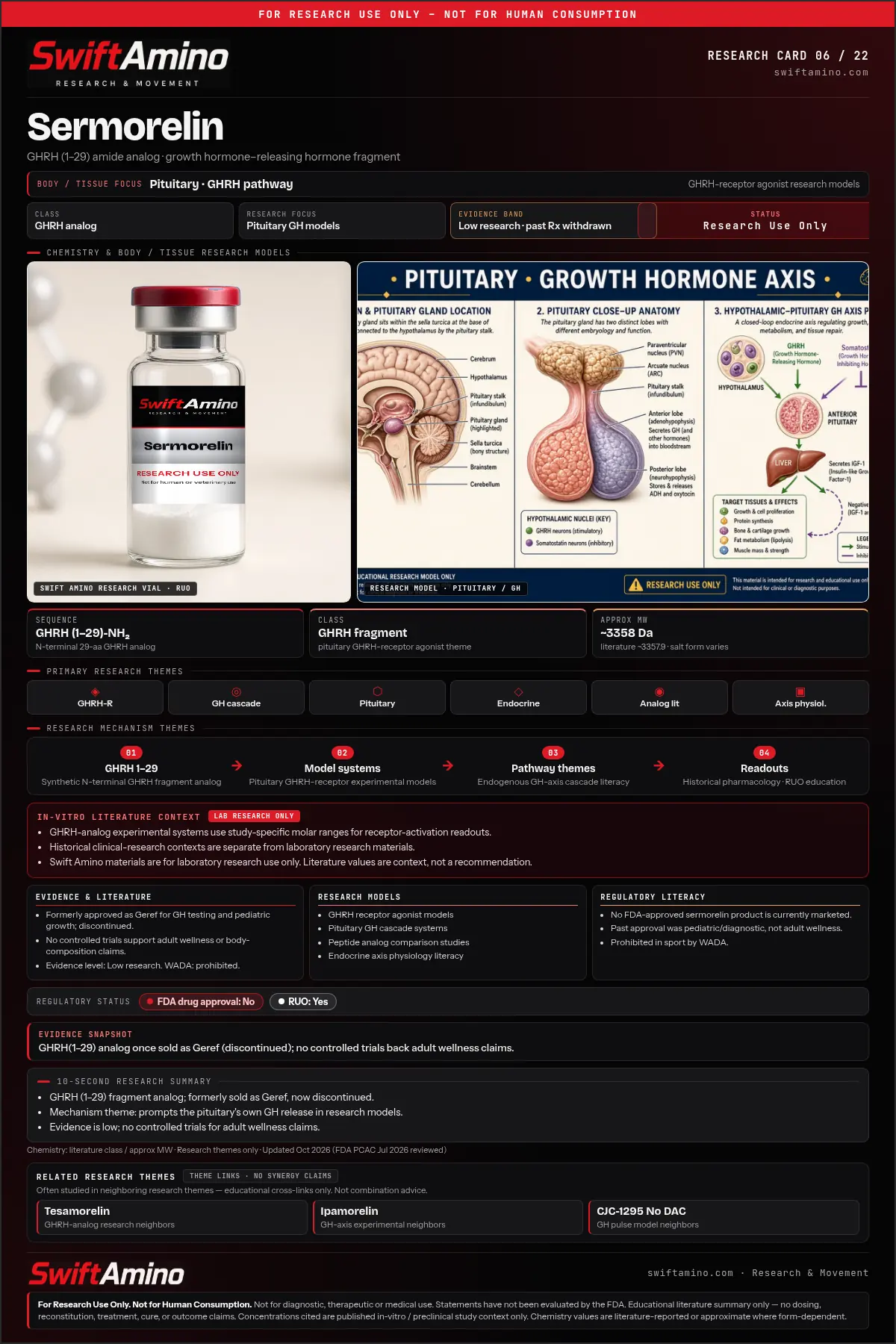
GHRH analog
Sermorelin: The Discontinued GHRH Fragment, Explained
A 29-amino-acid piece of growth-hormone-releasing hormone with a short history as a prescription product.
Low research · past Rx withdrawn
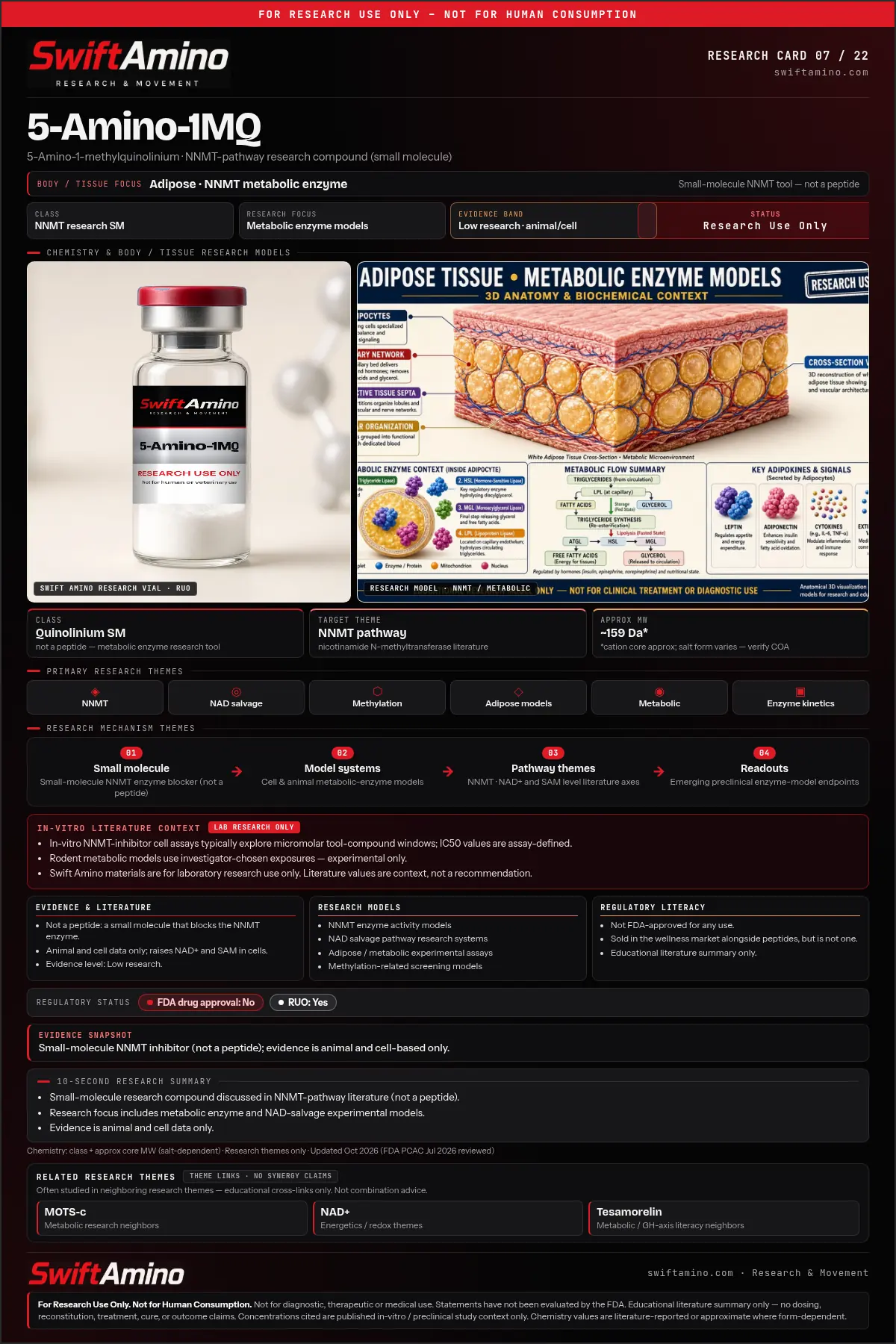
Small-molecule NNMT inhibitor
5-Amino-1MQ: A Small Molecule, Not a Peptide
Sold alongside peptides but chemically a different thing: a small molecule that blocks an enzyme called NNMT.
Low research · animal/cell
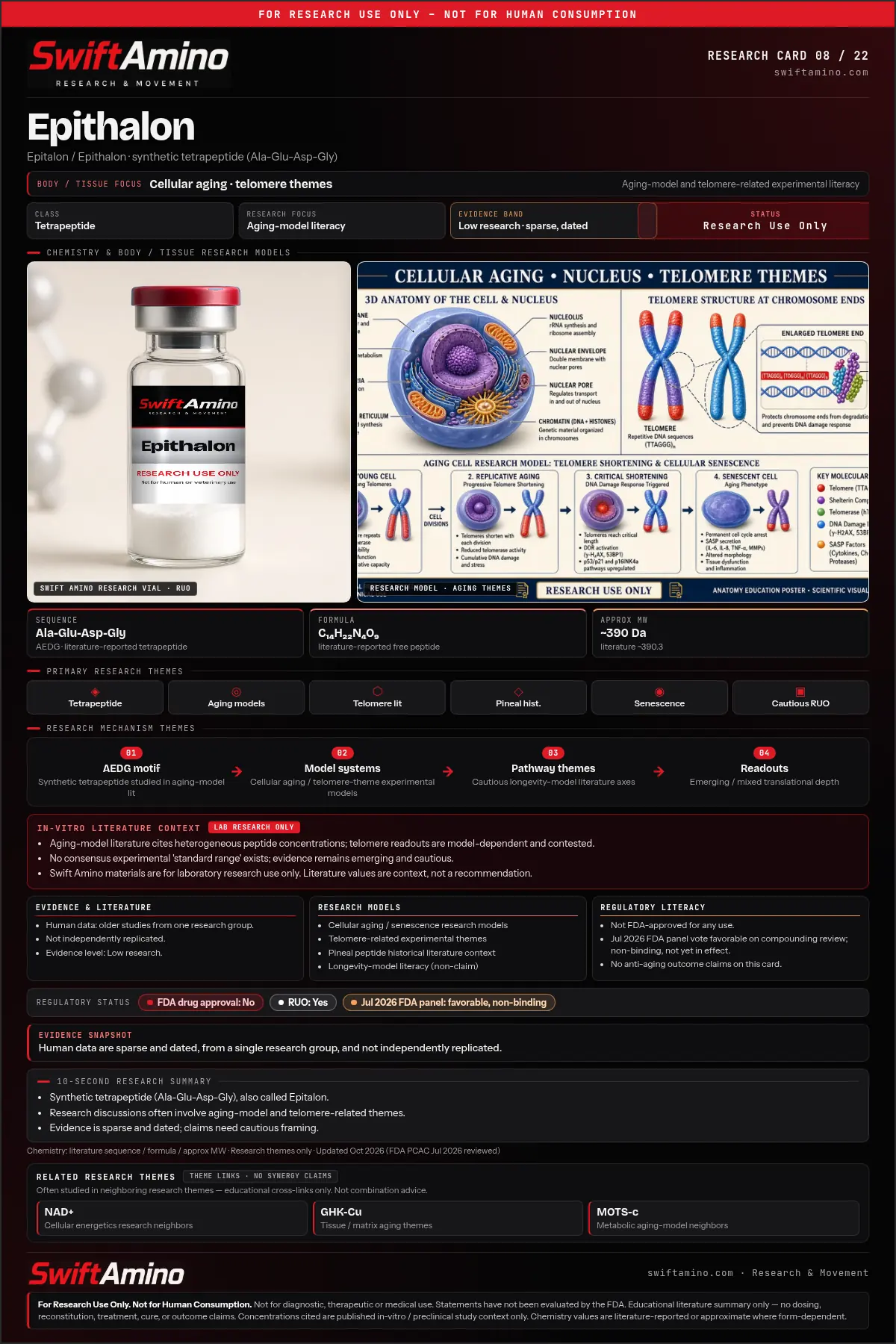
Tetrapeptide
Epithalon (Epitalon): A Cautious Look at an Aging-Research Tetrapeptide
Four amino acids, a lot of internet attention, and a thin evidence base from a single research group.
Low research · sparse, dated
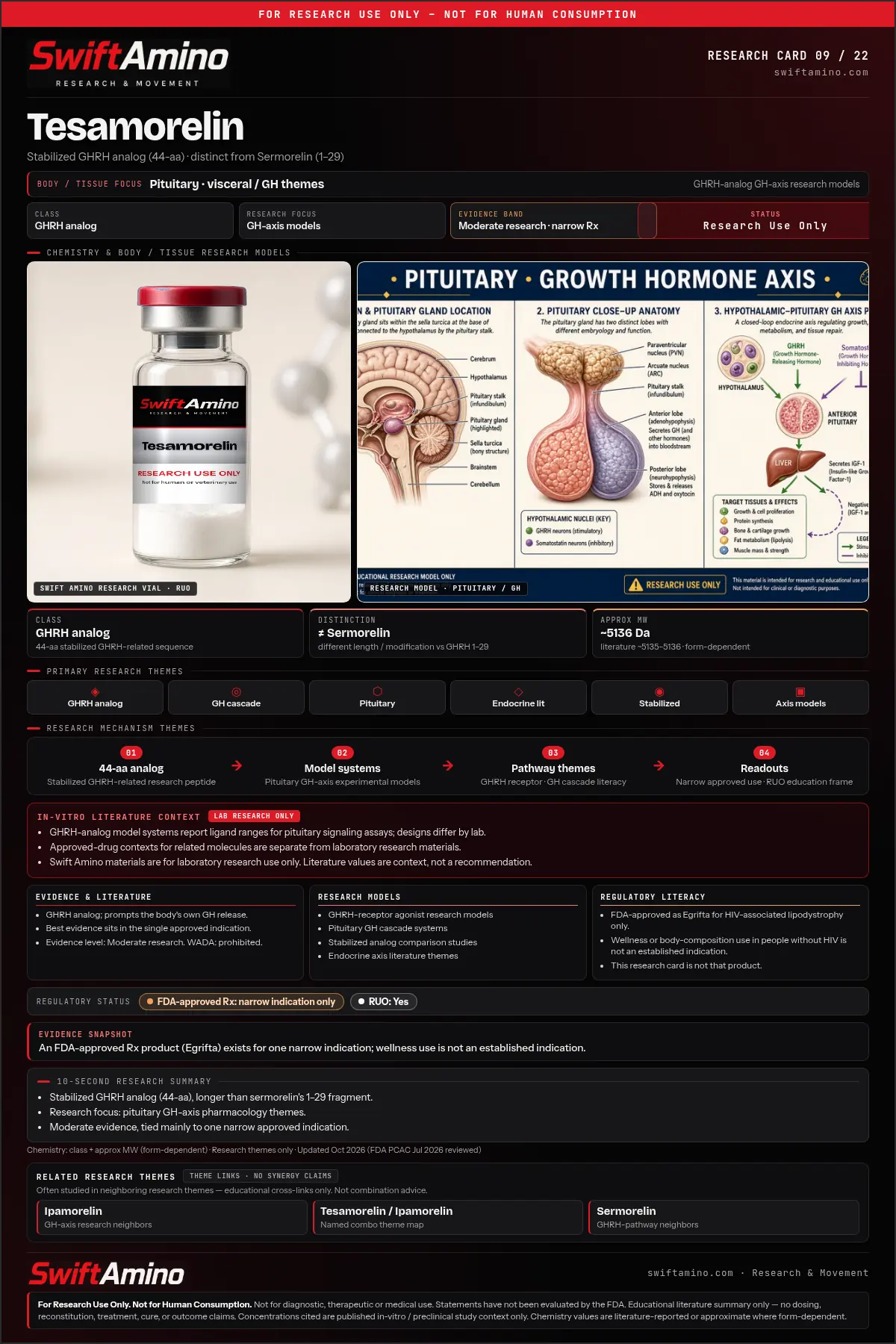
GHRH analog
Tesamorelin: One Approved Product, One Narrow Use
A longer, stabilized relative of sermorelin, and a rare peptide with a real FDA approval for a very specific condition.
Moderate research · narrow Rx
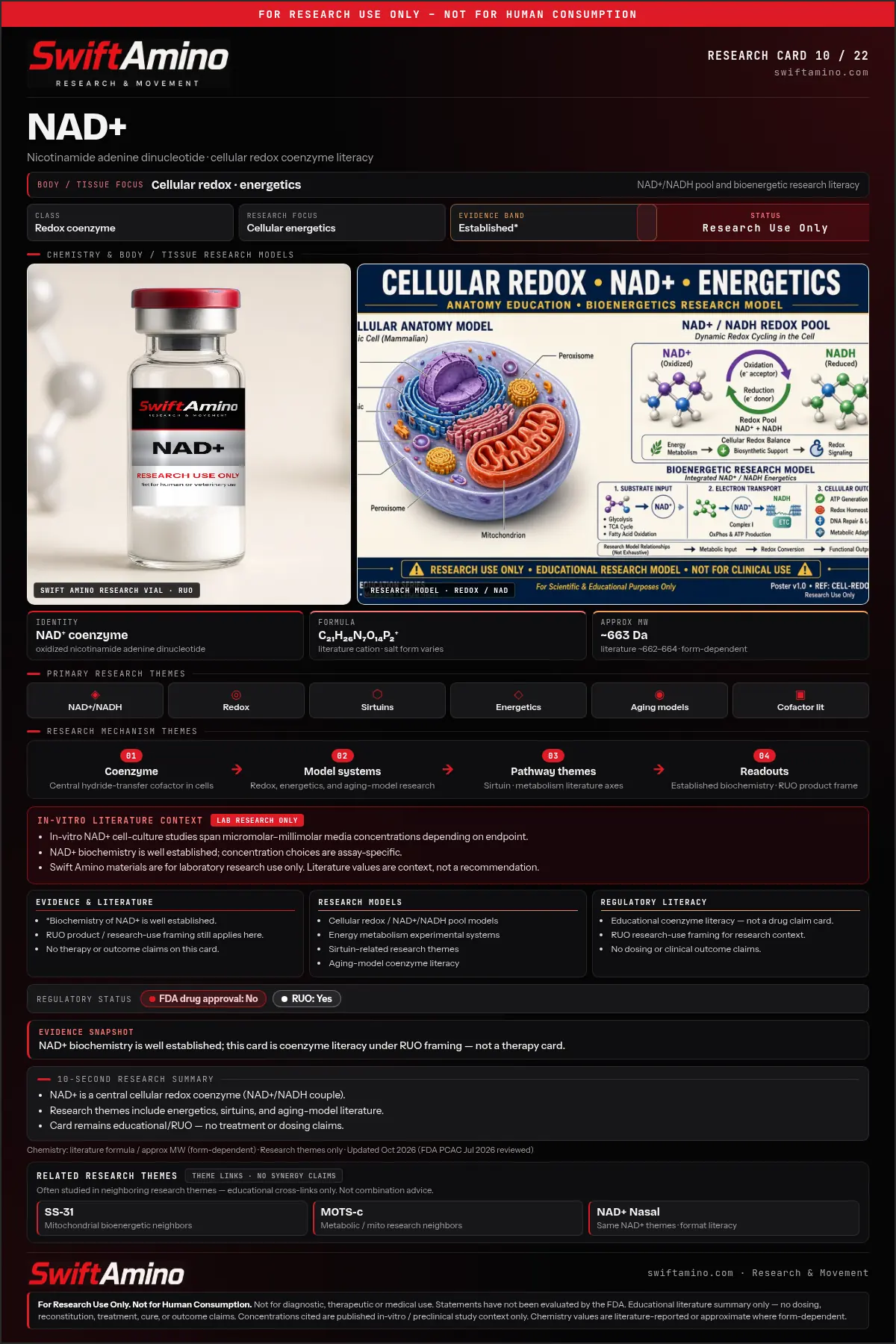
Redox coenzyme
NAD+ Explained: The Coenzyme at the Center of Cell Energy
A molecule every cell depends on, explained as basic biochemistry rather than as a product claim.
Established biochemistry
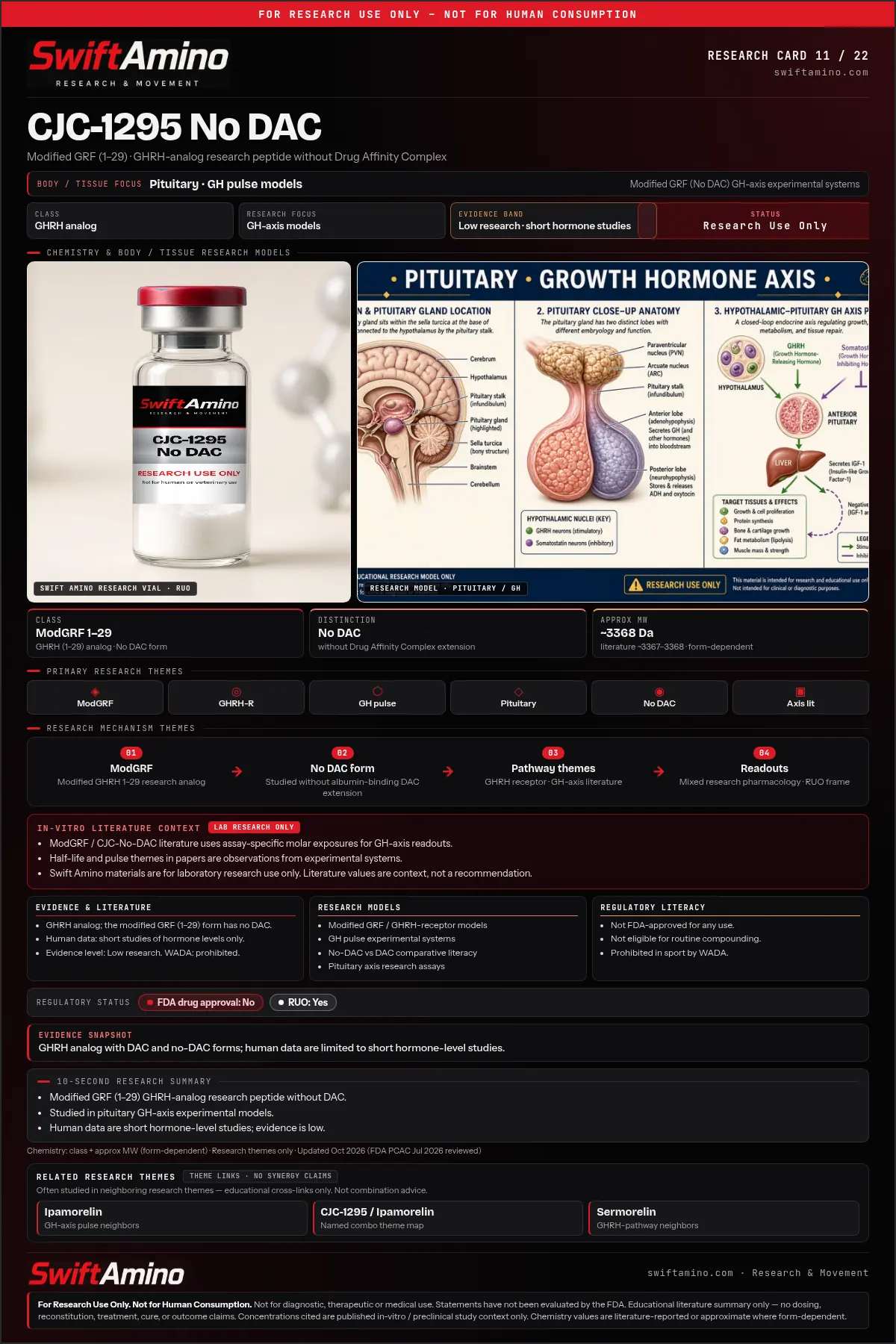
GHRH analog
CJC-1295 Without DAC: Understanding the Modified GRF (1-29) Form
What the letters DAC mean, and why the 'no DAC' version is a different research tool from the long-acting one.
Low research · short hormone studies
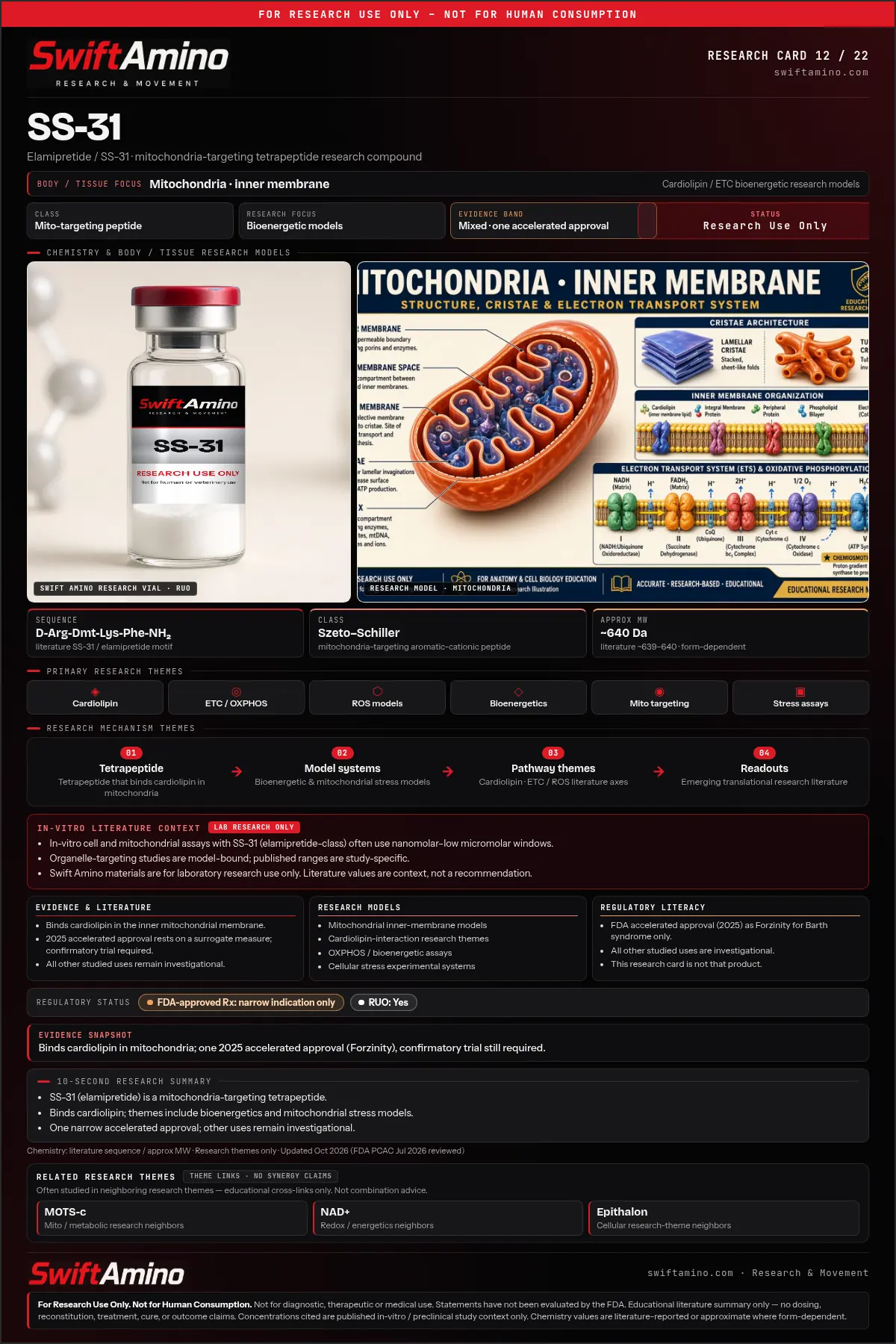
Mitochondria-targeting peptide
SS-31 (Elamipretide): The Mitochondria-Targeting Tetrapeptide
A tiny peptide that homes in on the mitochondrial membrane and carries one narrow accelerated approval.
Mixed · one accelerated approval
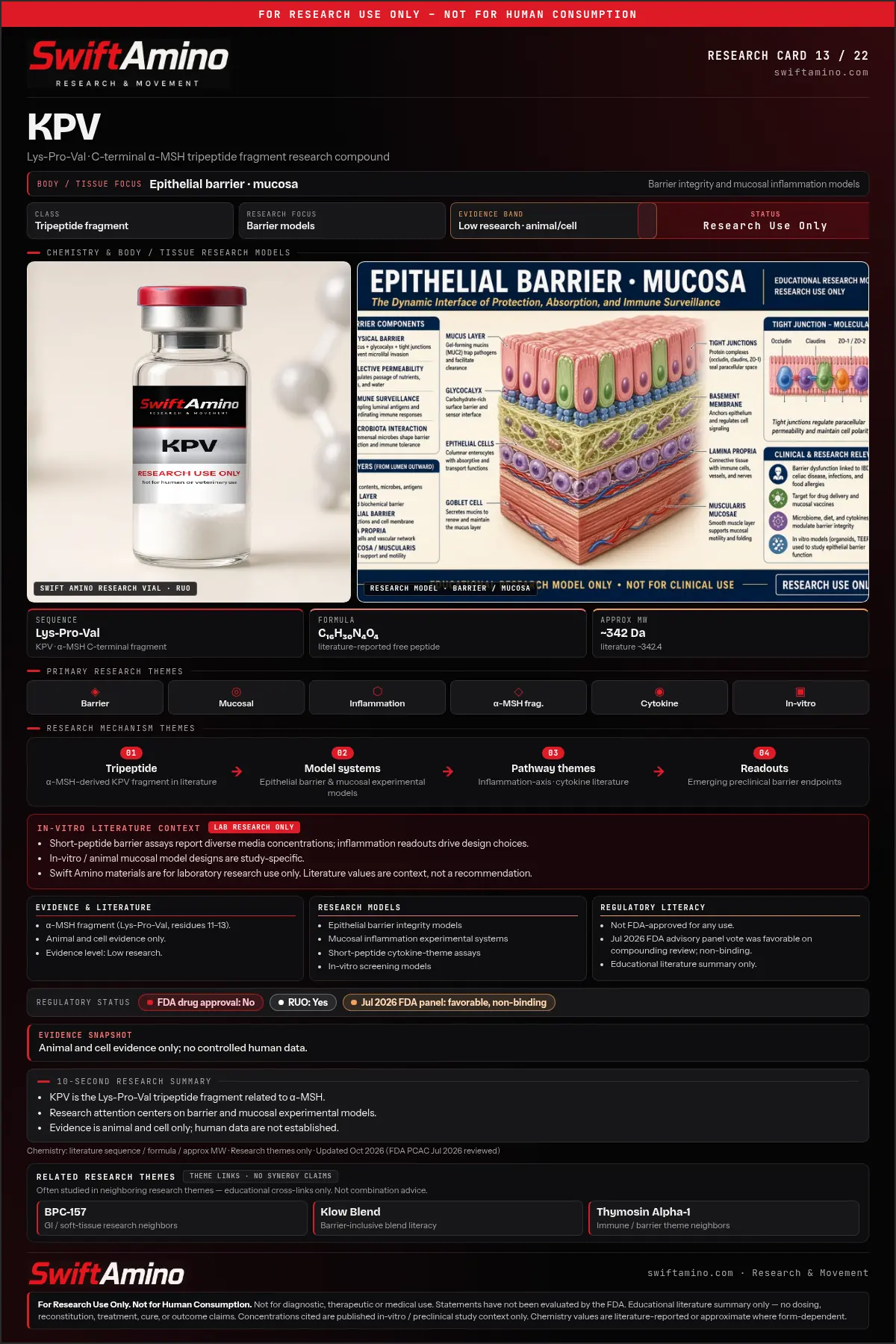
Tripeptide fragment
KPV: A Three-Amino-Acid Fragment Studied in Barrier Models
Just three amino acids long, cut from a larger hormone, and studied in gut-lining and mucosal models.
Low research · animal/cell
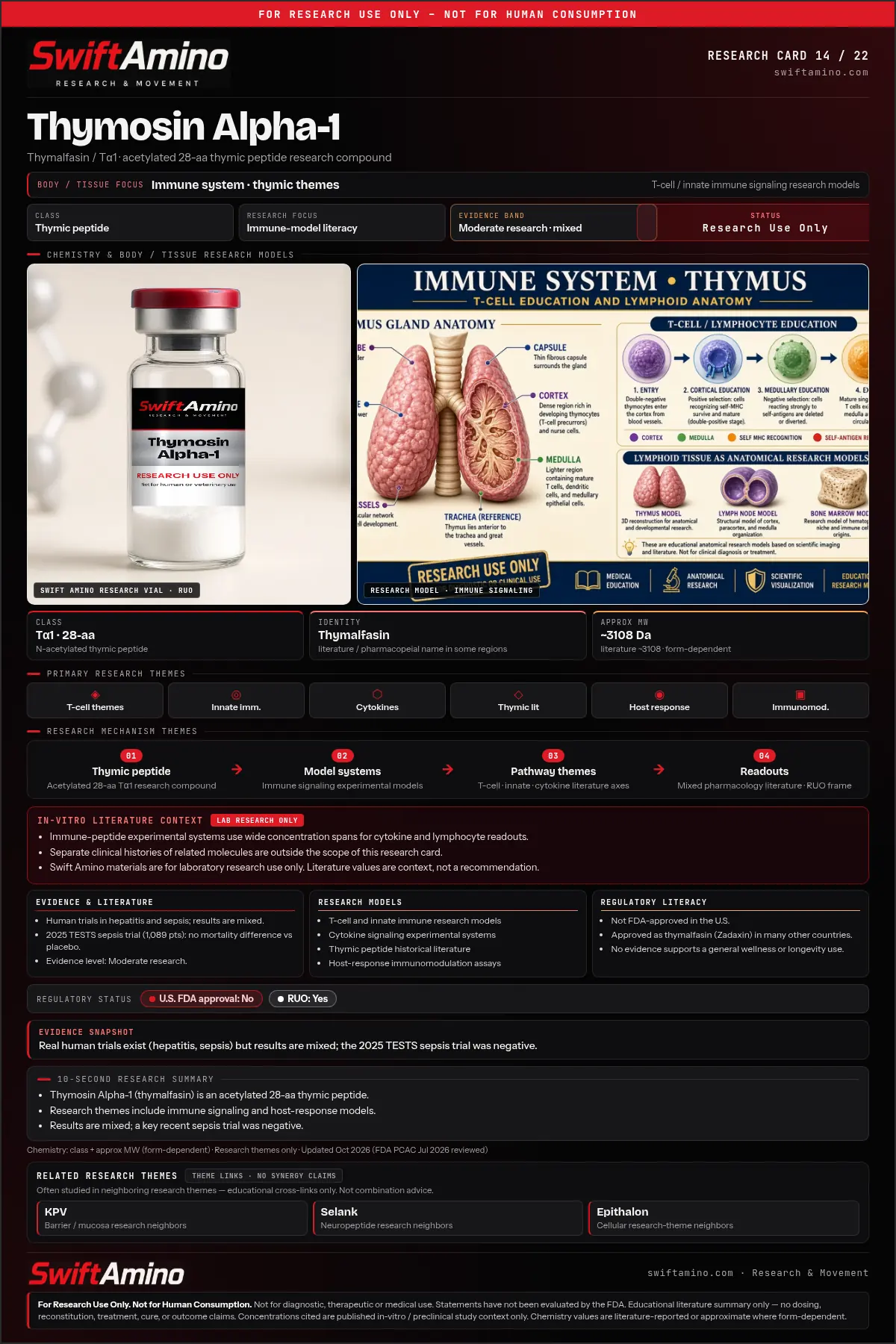
Thymic peptide
Thymosin Alpha-1: Real Human Trials, Mixed Results
One of the few peptides in this series with genuine human trials, and a good example of why results can be mixed.
Moderate research · mixed
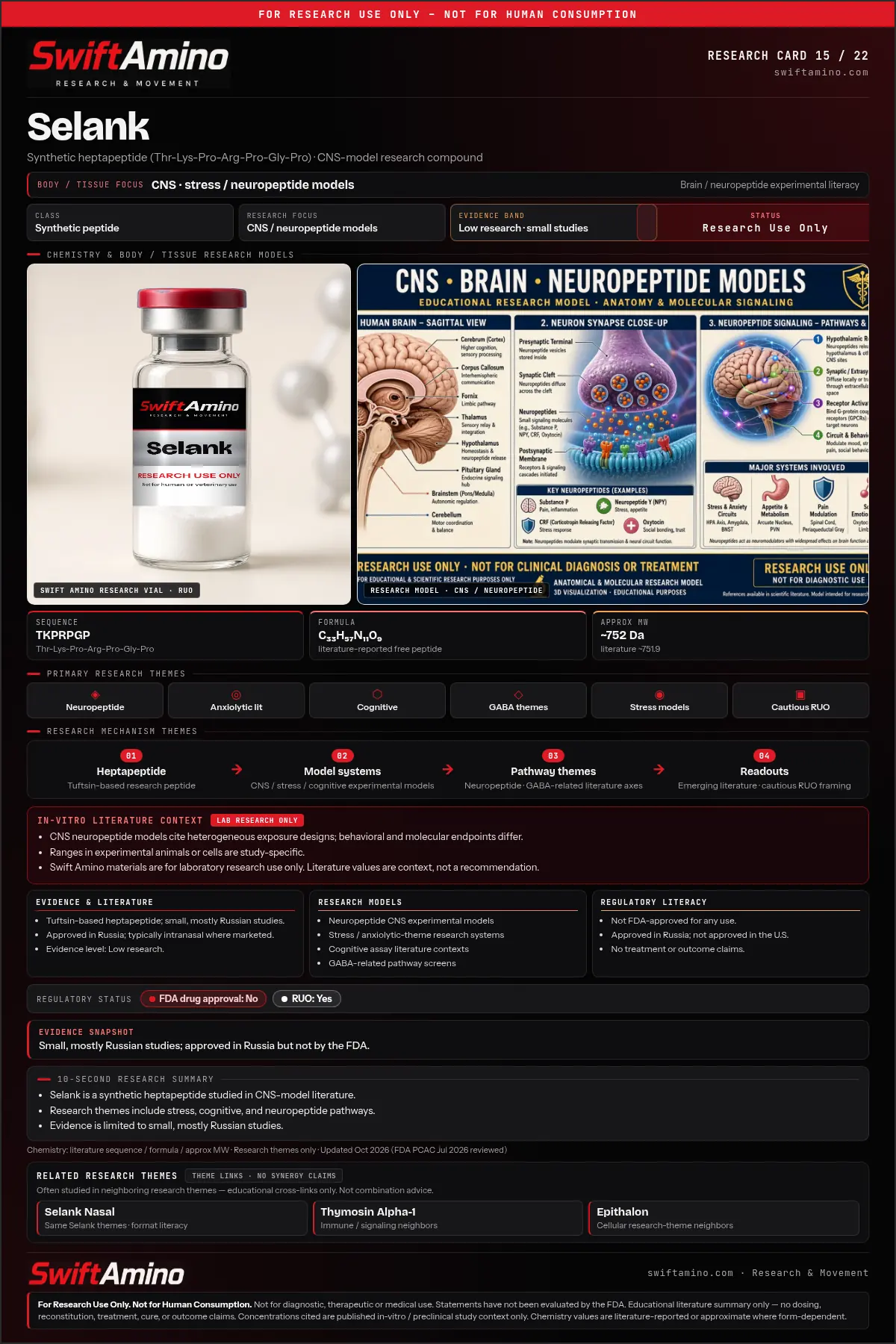
Synthetic heptapeptide
Selank: A Tuftsin-Based Peptide With a Small, Regional Evidence Base
A seven-amino-acid peptide developed in Russia, with research that is limited in size and geography.
Low research · small studies
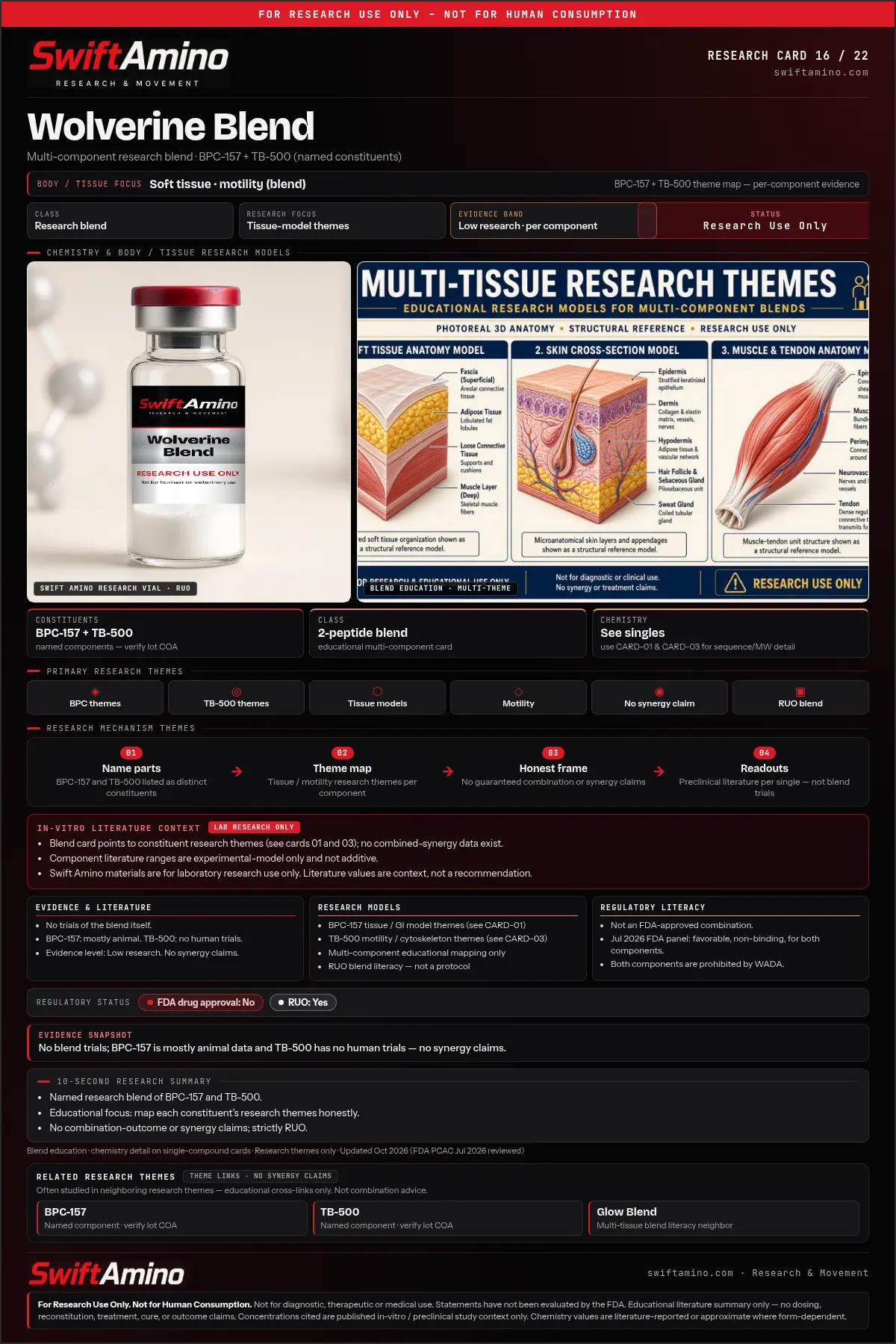
Research blend
The Wolverine Blend (BPC-157 + TB-500): Reading the Evidence One Ingredient at a Time
A two-ingredient research blend, and why the right way to read it is component by component.
Low research · per component
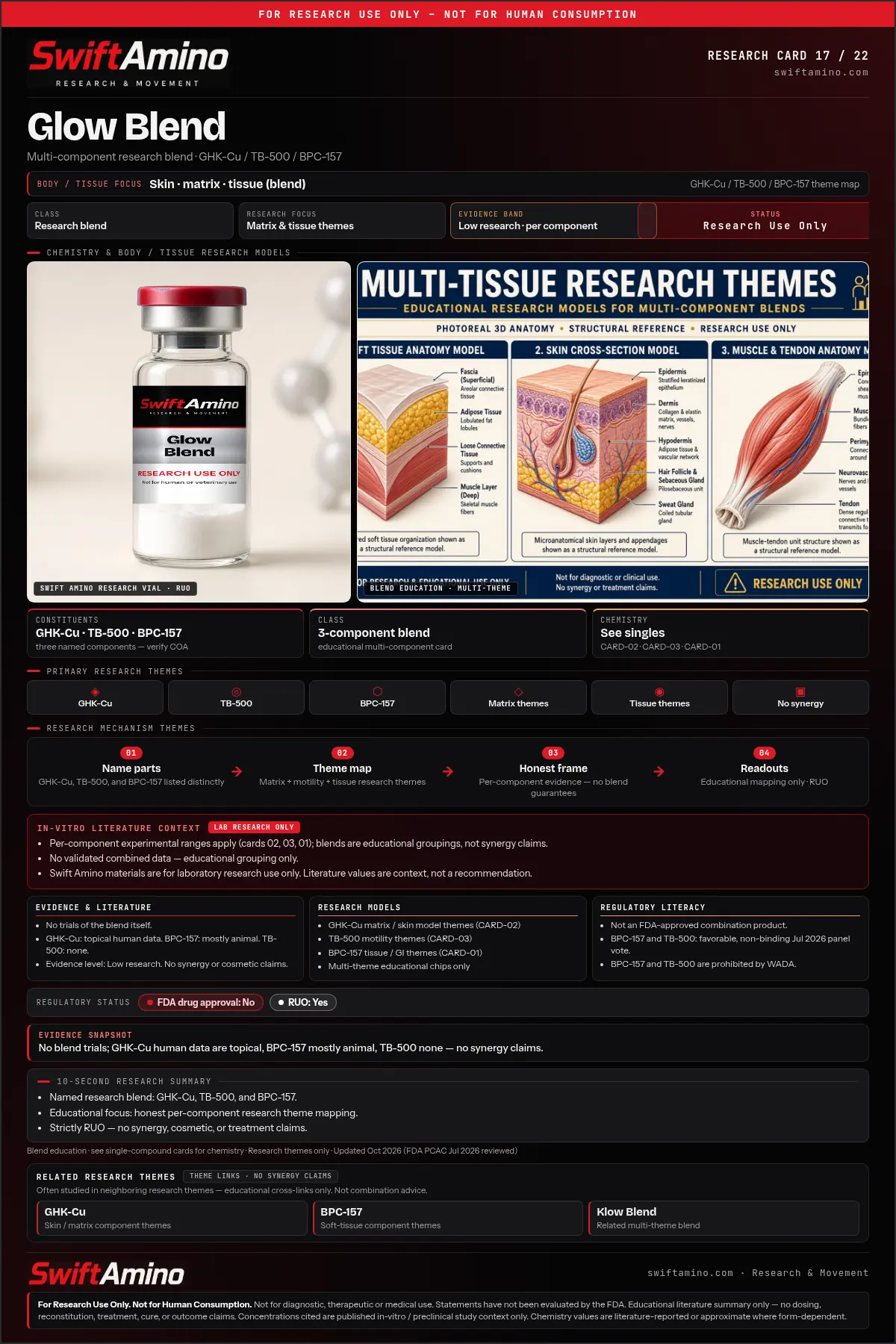
Research blend
The Glow Blend (GHK-Cu, TB-500, BPC-157): A Component-by-Component Guide
Three named ingredients, three different evidence stories, and no data on the combination.
Low research · per component
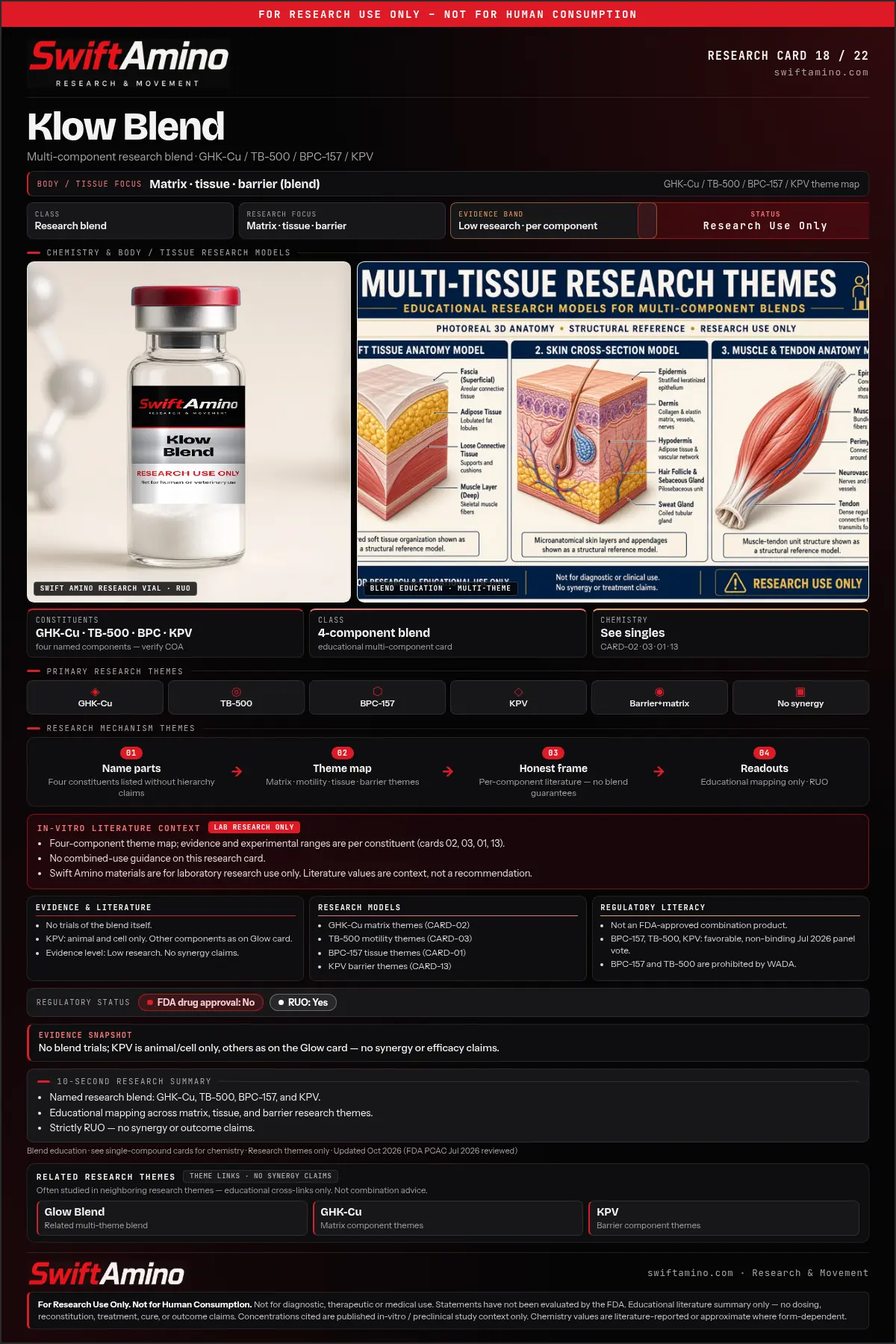
Research blend
The Klow Blend (GHK-Cu, TB-500, BPC-157, KPV): A Four-Ingredient Reading Guide
The Glow blend plus KPV, and a reminder that more ingredients do not mean more evidence.
Low research · per component
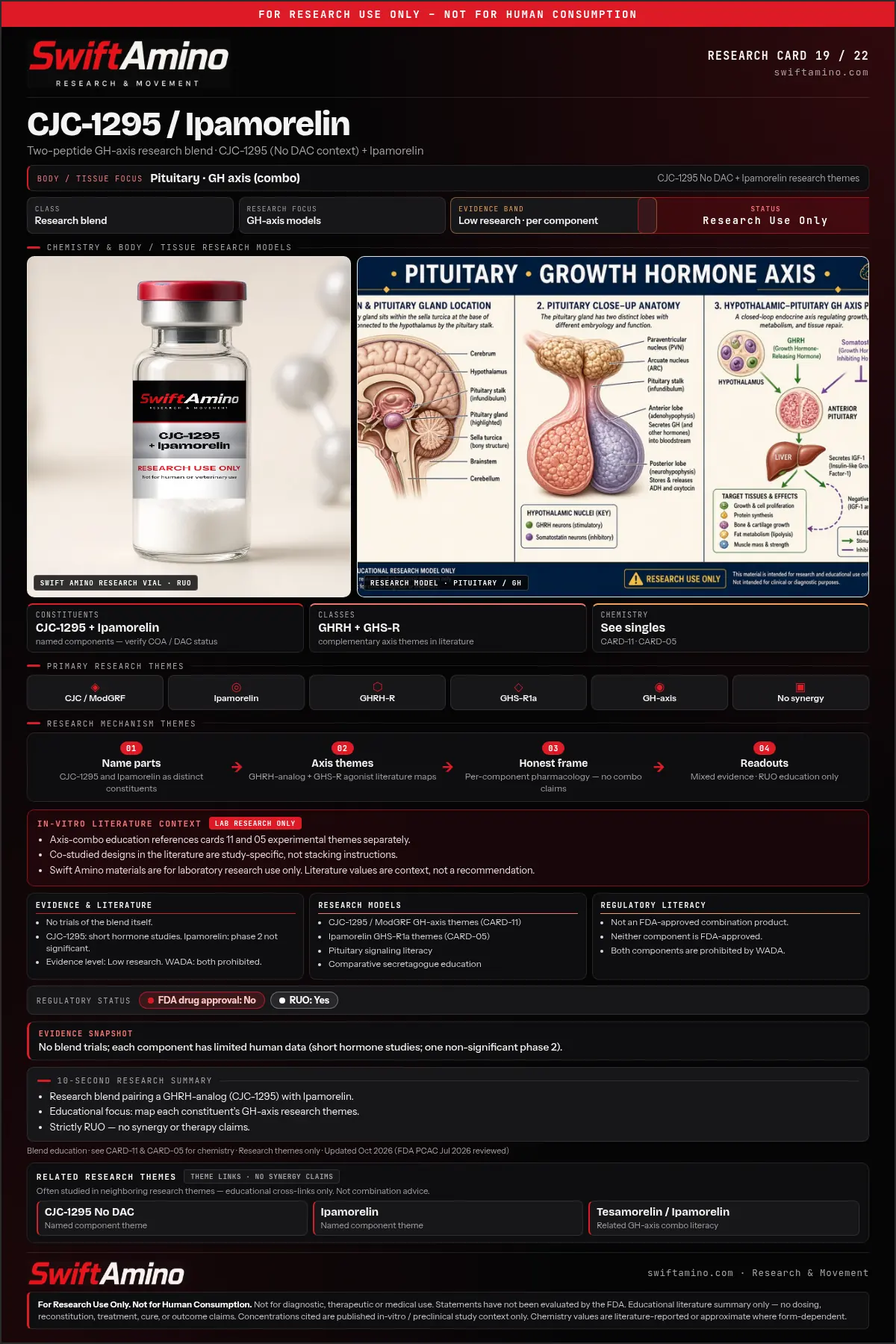
Research blend
CJC-1295 and Ipamorelin Together: Two Different Pituitary Signals
One ingredient talks to the GHRH receptor, the other to the ghrelin receptor. The evidence for each still has to stand on its own.
Low research · per component
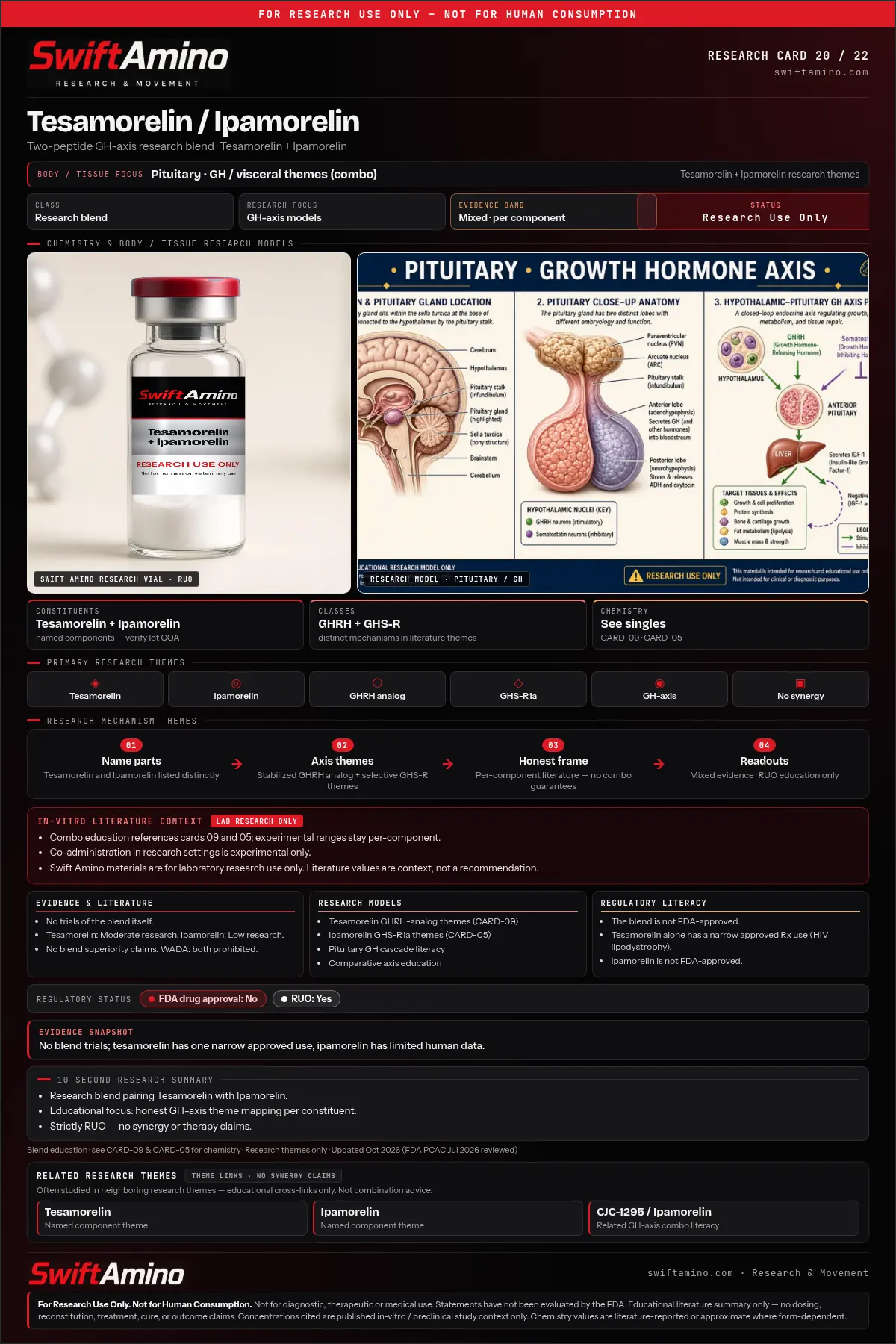
Research blend
Tesamorelin and Ipamorelin: One Approved Ingredient, One Not, No Blend Data
Two ingredients with very different regulatory records, grouped on one card for education only.
Mixed · per component
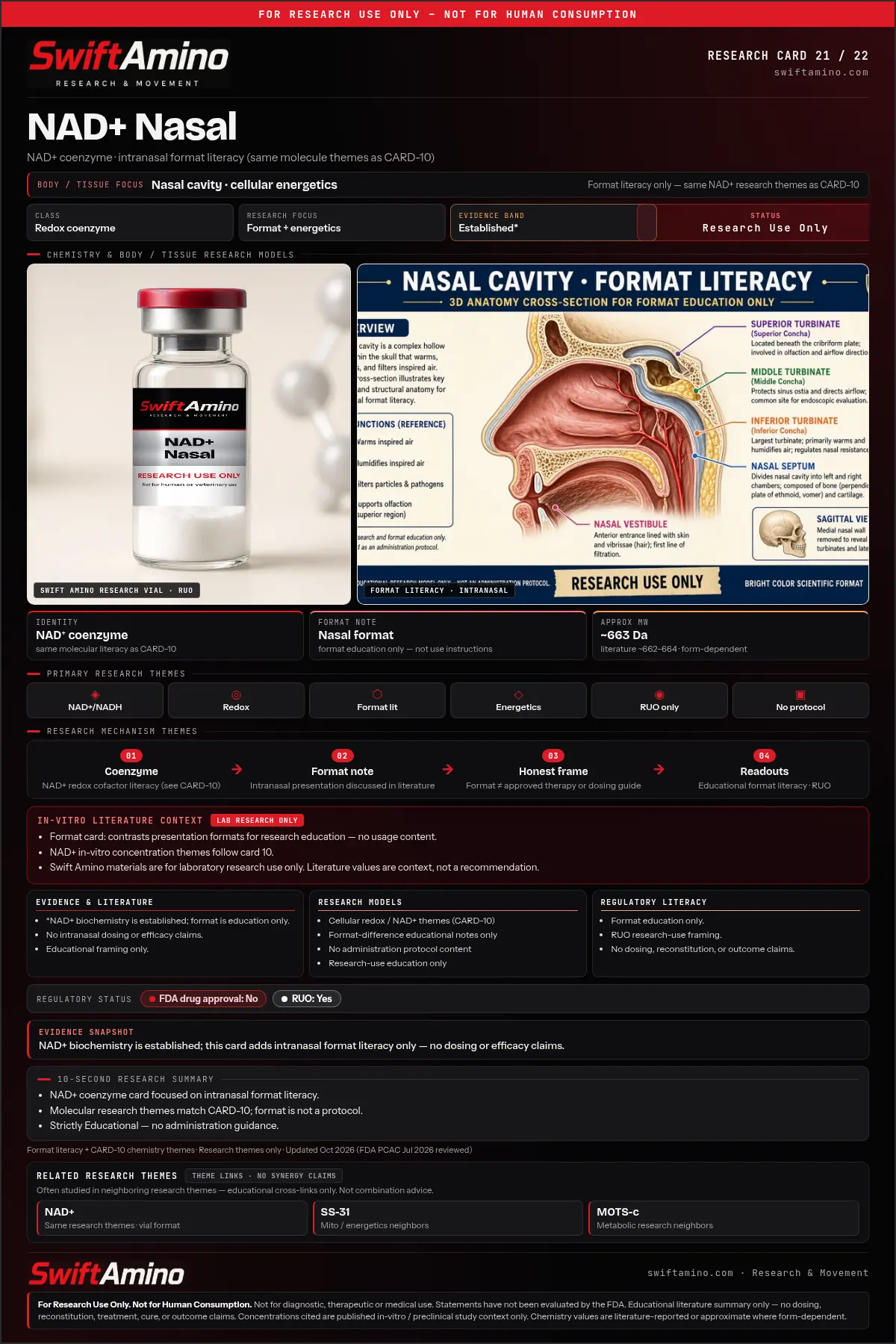
Redox coenzyme
NAD+ Nasal Spray Format: Why a Delivery Format Is Not a Dosing Guide
Same molecule as our NAD+ article, in a different catalog format, with no instructions attached.
Established biochemistry · format note
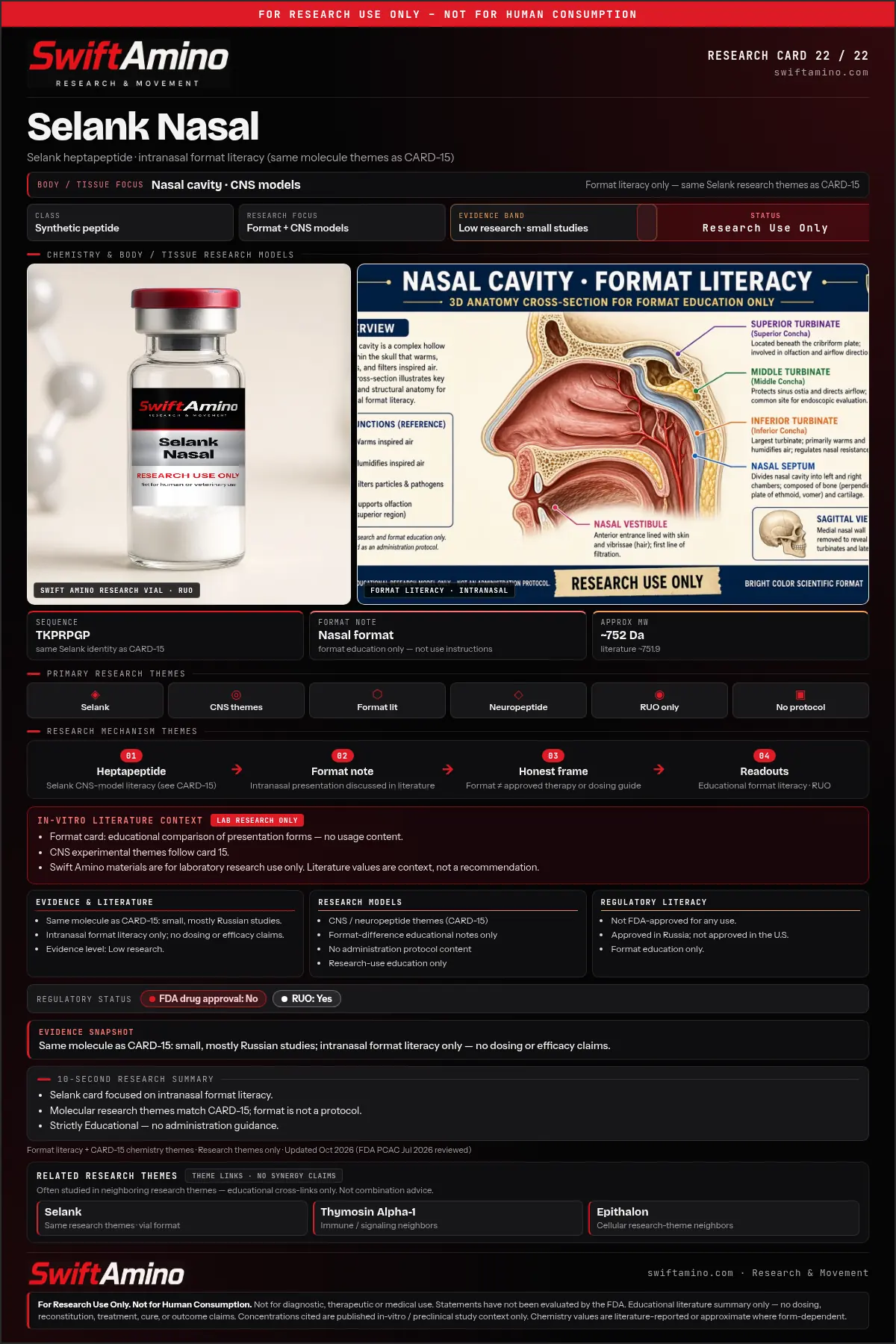
Synthetic heptapeptide
Selank Nasal Format: Same Peptide, Different Presentation
The same seven-amino-acid peptide as our Selank overview, in a nasal catalog format and with no use instructions.
Low research · small studies